
UGC User-Generated Content for Brands in London
User-generated content has gone from a nice-to-have social media tactic to one of the most important formats in brand marketing. The numbers are hard to argue with — UGC-style creative consistently outperforms polished brand advertising on engagement, click-through rates, and conversions across every major platform. Consumers trust content that looks like it came from a real person, and they scroll past content that looks like it came from an agency.
But here is the thing that most articles about UGC do not mention: the best-performing UGC is increasingly being shot in professional studios, not bedrooms. Brands that have figured this out are producing content that feels authentic and organic while maintaining the production quality, consistency, and volume that serious marketing campaigns require. If you are a brand or marketing manager still relying entirely on creators filming in their kitchens, this shift is worth paying attention to.
The Problem With Bedroom-Shot UGC
Organic UGC works. A genuine customer filming an unboxing video on their phone carries an authenticity that no amount of production budget can replicate. But when you are running UGC as a core part of your paid media strategy — and in 2026, most brands are — relying on content shot in uncontrolled environments starts to create problems.
Lighting is the biggest one. A creator filming in their living room at 4pm in January is working with completely different conditions to one filming in a south-facing kitchen in July. The colour temperature shifts, the shadows fall differently, and the product looks different in every piece of content. That inconsistency matters when you are running multiple creatives side by side in a paid campaign and want your brand to look cohesive. Audio is another issue — background noise, echo from hard floors, and the general ambient sound of a flat in a busy city all degrade the quality of talking-head content. Then there are the backgrounds. A cluttered bookshelf, an unmade bed just visible in the corner, a flatmate walking through the shot — none of these are deal-breakers for a casual social post, but they are distractions when the content is running as a paid ad and every second of attention counts.
What Studio UGC Actually Looks Like
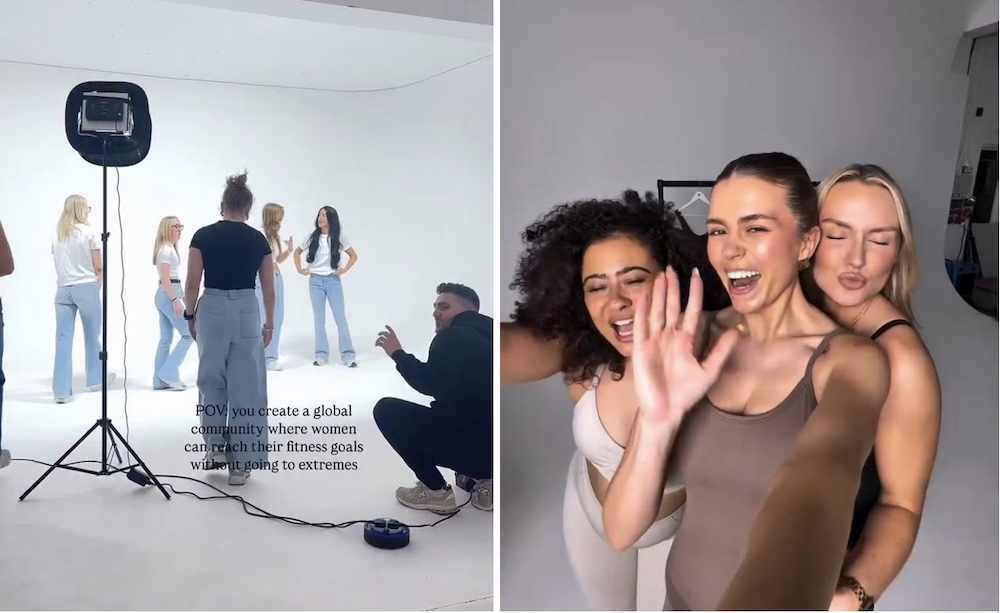
Studio UGC is not a contradiction in terms. It is a hybrid format that takes the authenticity and relatability of user-generated content and produces it in a controlled environment where lighting, sound, and backgrounds are consistent and professional. The creator still delivers to camera in their own voice with their own personality. The styling is still natural and casual. The content still feels like it was made by a real person with a real opinion. The difference is that the production quality is invisible — the lighting is flattering but not obviously “studio,” the background is clean but not sterile, and the audio is clear without sounding like it was recorded in a booth.
This is the format that high-performing direct-to-consumer brands have been using for the past two years, and it is now filtering into the mainstream. The logic is simple. If UGC outperforms brand content because it feels authentic, and professional production outperforms amateur production because it looks and sounds better, then combining the two gives you the best of both. Content that audiences trust and that performs well enough in paid media to justify scaling.
Why Studios Work Better for UGC Than You Might Expect
Controlled Lighting Without the “Studio Look”
The assumption many brand managers make is that shooting in a studio will automatically make the content look too polished — too clean, too lit, too obviously produced. That is only true if you light it like a traditional brand shoot. A good studio with daylight options can replicate the soft, natural feel of window light in a living room, but without the inconsistencies that come with actually shooting in one. The light stays the same from the first take to the last. It does not change because a cloud moved or because you shifted the camera angle. For brands that need multiple pieces of content to feel like they belong to the same campaign while still looking organic, this kind of controlled natural light is invaluable.
Clean Backgrounds That Do Not Distract
An infinity cove gives you a seamless, distraction-free background that keeps all the attention on the creator and the product. But you do not have to use it as a blank white void. Dress it with a few props, add a coloured gel to the background lighting, or shoot against a textured wall elsewhere in the studio — the point is that you control what is in the frame and what is not. No cluttered shelves. No brand logos from competitors accidentally visible on a shelf. No visual noise competing with your product for the viewer’s attention. For UGC that is running as paid creative on Instagram, TikTok, or Meta, those clean backgrounds make a measurable difference to how long someone watches before scrolling.
Batch Production
This is where the studio model really pays for itself. Instead of briefing five individual creators, shipping them product, waiting for deliverables, and then discovering that three of the five pieces have lighting or audio issues you cannot fix in post — book one studio day and cycle your creators through in sequence. A well-organised UGC studio day with four creators can comfortably produce 20 to 30 individual pieces of content: talking-head videos, product demos, unboxing sequences, B-roll, and stills. One day of studio hire replaces weeks of coordination and delivers a library of content that is ready to test and deploy across your paid channels immediately.
Consistency Across a Campaign
When every piece of content is shot in the same studio with the same lighting setup and the same backdrop options, you get a production baseline that stays consistent even when the creators change. Each creator brings their own personality, their own delivery style, and their own perspective on the product — that is the whole point of UGC. But the visual and audio quality remains locked, which means your campaign looks intentional rather than cobbled together from whatever each creator happened to film on their phone. That consistency also makes A/B testing more reliable, because you are testing the creative variable — the hook, the script, the creator — not the production quality.
How to Plan a UGC Studio Shoot
Planning a UGC studio day is closer to organising a content production day than a traditional photo shoot. Start with the brief. Define what you need — how many creators, how many pieces per creator, what formats (vertical video, square stills, talking-head, product demo), and what the key messages or hooks are. Give creators enough direction to stay on brand but enough freedom to deliver in their own voice. The most effective UGC briefs provide guardrails, not scripts. Specify what must be said, what must not be said, and leave the rest to the creator.
Schedule your creators in blocks — typically 60 to 90 minutes each, depending on how many setups you need per person. Allow 15 to 20 minutes between slots for wardrobe changes, lighting adjustments, and set resets. Have products prepped, charged, unboxed, and ready so no time is wasted on logistics during the shoot. If your UGC involves unboxing, have sealed units prepared in advance for each creator. Bring a monitor so you can review takes on set and flag any issues before the creator leaves, rather than discovering problems in post when it is too late to reshoot.
The Influencer Marketing Hub reports that 56 percent of brands are now actively focused on generating UGC, and the shift toward structured, scalable production is accelerating. Studios are a natural fit for that scaling process — the environment is already set up for efficient content creation, and the on-site team can support with lighting, equipment, and troubleshooting so your creators can focus entirely on delivering authentic content.
Studio UGC at 69 drops studios
Our studios at 69 drops studios in Whitechapel are set up for exactly this kind of work. Whether you need a daylight studio for soft, natural-looking UGC or a blackout space where you can build a more controlled lighting setup, we have options that suit different briefs and budgets. Our infinity coves provide clean, seamless backgrounds for product-focused content, while our larger studios offer enough space to run multiple creators through efficiently across a full production day.
We also offer eCommerce photography services for brands that want to combine their UGC production day with professional product stills — capturing both your paid social assets and your product page imagery in a single booking. With on-site equipment, lighting rigs, and a team that understands how to support high-volume content shoots, 69 drops studios is built for the kind of fast-paced, multi-creator production days that modern UGC campaigns demand.
Research from Conbersa highlights that consumers are 2.4 times more likely to view user-generated content as authentic compared to brand-created content. The studio environment does not change that dynamic — it enhances it by making the authentic content technically better without making it feel less real.
Book a UGC Production Day
If you are a brand or agency planning a UGC production day and want a studio that can handle the volume, the logistics, and the creative flexibility that this kind of shoot demands, get in touch. You can book a studio directly through our website or contact our team to discuss your requirements. We are happy to advise on which studio configuration works best for your brief and help you structure a shoot day that maximises your output.